Repairs and Refits
I’ve been releasing new iterations of the Force Command Primer on a consistent monthly basis for almost a year now. Each update has been meant to smooth out the rough edges of the system. Despite life and work being very busy, this rhythm has really worked for me—it has been fun!
But some of you who are following things closely may have noticed my combo-breaker this month.
It feels odd on my end, too—there is a lot of gratification from pushing out small, continuous improvements that I didn’t get to feed off of this month.
I also thought we’d be at version 1.0 by now.
A couple months ago, I made a physical test copy of the book, showed it off at a convention, and began running a serious campaign with my local group. My sights were starting to become set on developing other materials—a campaign organizer packet, a pre-made campaign module, an actual web tool for managing your force (rather than an elaborate Google Sheet), and more.
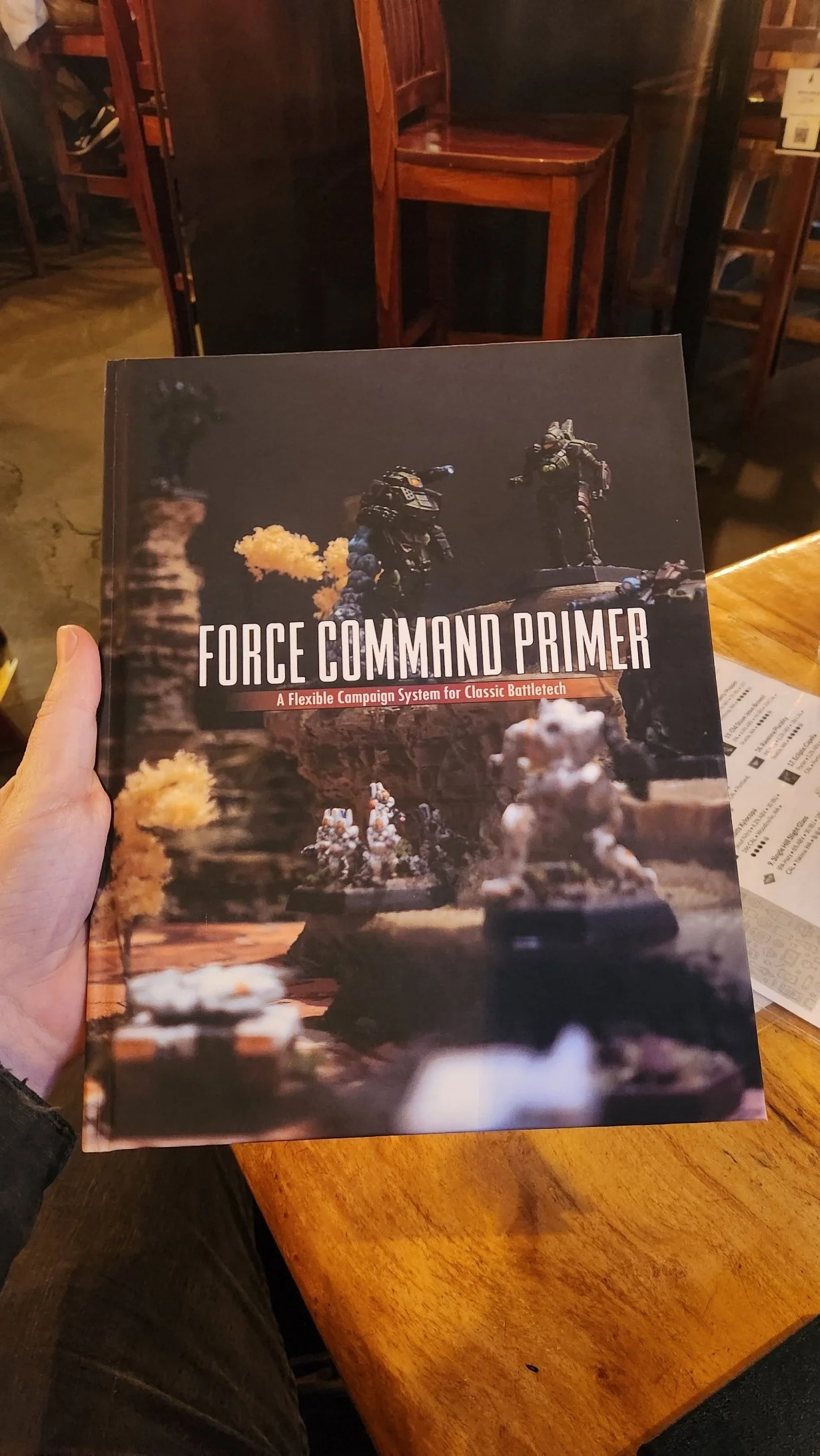
It felt incredibly cool to see this thing in physical form for the first time!
So why have things halted?
Sitting down to run a serious campaign and directly observing how players contend with the FCP has forced me to take a very different perspective. Some elements of this system are still really rough—things that can’t be fixed (and in some ways have been exacerbated) by my routine of doing frequent, more cursory revisions.
When I first started working on the Force Command Primer, I had limited game design-experience, and no illusions of being able to design something “better” than the established campaign materials—I just wanted a slimmer, more approachable friendly version of Campaign Operations that could support player-vs-player stories. When I realized Campaign Ops was not made conducive to these goals, and no amount of contorting the rules would change that, I started to incorporate ideas from other campaign-oriented miniatures games, the Battletech PC game, and more. This has led to a lot of inconsistencies, especially between the different chapters of the book.
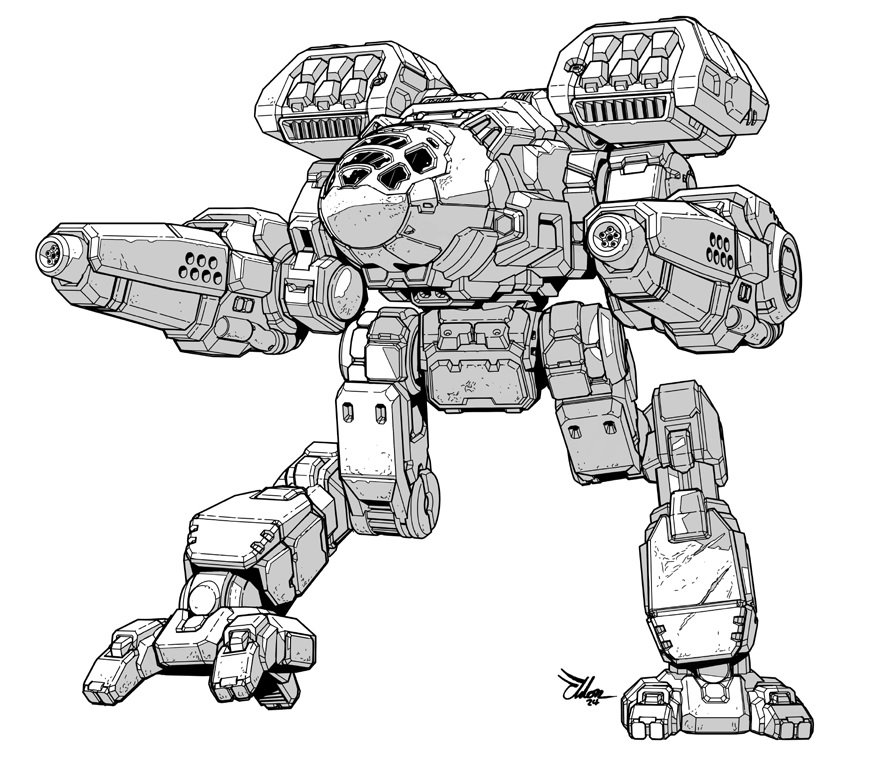
You better have a great rules lawyer on hand if you plan to salvage this guy.
For instance, a player in my campaign recently incapacitated an enemy Mad Cat IV, and held the battlefield. This was an incredibly exciting moment, since (because of its XXL engine) the Mad Cat is worth an ungodly number of C-Bills. This player had (I’m fairly certain) abandoned their mission objectives in order to salvage it, and the plan paid off!
…or so we thought, until some really valid questions came up:
If the player decided to salvage the whole unit, should they sell it for 50% of its value (as stated in the Salvage section) or for 30% plus all of their bonuses in the Purchasing and Selling Units section?
If a side torso of the Mad Cat was destroyed, did the engine slots in that torso count as destroyed as well? (The Force Command Primer says components in a destroyed location can be salvaged, but the BattleMech Manual says that they are all destroyed)
If we handwaved the rule in the BattleMech Manual in favor of something that felt thematic, what would the repair costs be for the engine? (The cost of XXL’s is missing from the repair cost tables in the Force Command Primer, and the formulas in the FCP are not a direct translation of what’s in the TechManual)
These sorts of ambiguities are easy to hand wave and ignore for some players, but they can also make it very hard for others to engage in satisfying, informed decision-making. It ends up causing players to spend hours poking through the archive of Battletech books, discussing interpretations, etc. rather than making compelling choices about the management of their force. It also puts a big burden on campaign organizers, since they are the ones who are repeatedly fielding these questions, or who have to maintain their own catalogue of campaign-specific rulings.
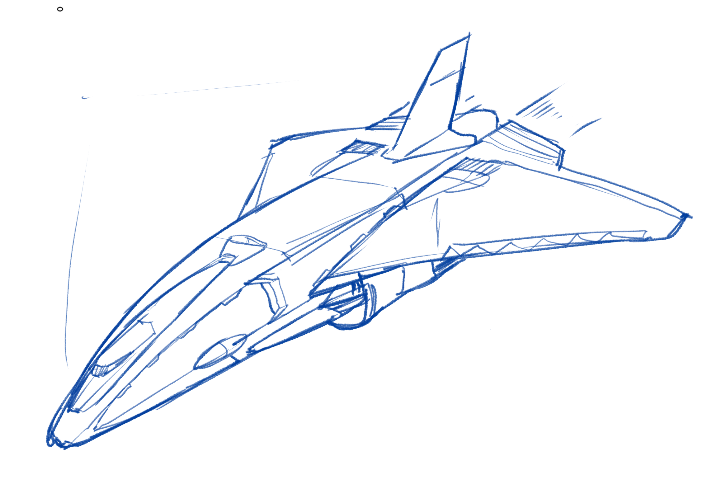
Rough sketch of the Gazelle artwork in the Force Command Primer, by Henry “Hansclaw” Aponte
The conclusion I’ve come to is that the system deserves more than just small iterative changes—it needs some real, thoughtful editing aimed at clarity, consistency, and precision.
A big inspiration in this regard has been the impending release of the new Battletech Core Rulebook. As a demo agent, I’ve been able to take a good long peek at it, and it is incredibly inspiring to see what Catalyst has accomplished. We’re talking about suggested rules for things that every new player asks about (such as how deployment works), nice diagrams that bring clarity to more complex rules (such as visibility), a pack of reliably fun missions that encourage balanced list-building, guidance on game size, and more.
As more players begin to engage with this and see it as Battletech’s gold standard, I really want the Force Command Primer to have a similar level of polish and approachability.
I also want to lean on the new foundation set down by the core rules, rather than forcing the FCP to bear more design weight than it needs. Newly codified mechanics for things like scanning, picking things up, and controlling objectives will hopefully mean that the Force Command Primer doesn’t need to meddle with them—these will simply be part of what it means to play Battletech.
All of this is to say:
I’m excited about the new core rules.
I’m excited about the potential of the Force Command Primer.
And I’m going to take the stretch from now until September (when the Core Rulebook is expected to be released) to carefully cook up improvements that I can confidently slap the “1.0” number onto.
Don’t worry, I’ll still be in the Discord server taking notes on everything that players and organizers share—please don’t stop. And in lieu of a full-scale update, I’d like to share a targeted revision that I think the FCP has been desperate for: A revised mission generation system.
I believe that this would be leagues better than what is currently in the Force Command Primer. I built it from the ground up with a mind towards the principles of good player-versus-player gameplay, and do’s and don’ts informed by over a year of feedback from you all. I’d love it if you have a moment to take a peek at it and let me know what you think.
Cheers,
Dustin